
How We Source Materials
As architects, one of the most common questions we get isn’t about design inspiration or spatial planning—it’s about materials. Where do they come from, and how do we choose which ones to recommend to our clients?
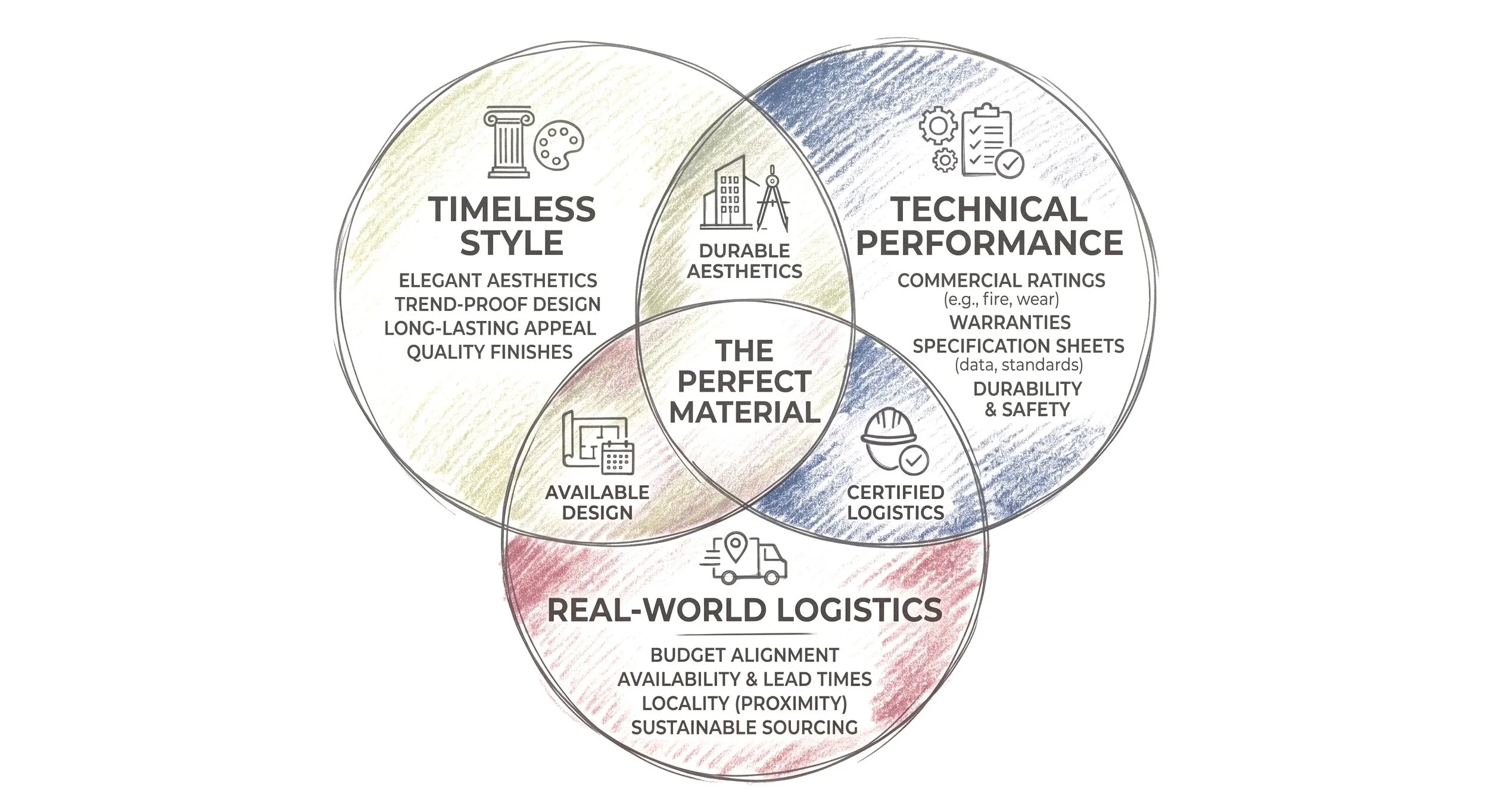
Like many things in life, it’s equal parts art, science, and practical logistics. Here is a look behind the curtain at exactly what we look for when sourcing materials for a project.
Budget is the Driver
First and foremost, the budget drives the train. It is the framework that shapes our entire search. Our goal is never to compromise on quality or aesthetics, but to find the absolute best materials that align with our clients' financial realities. We don't view budget as a limitation; we view it as a creative parameter.
The Technical Non-Negotiables
Once we confirm it aligns with the budget, we dive into the technical requirements. A material might look stunning, but it also has to perform. We check for commercial ratings to ensure durability, safety, and compliance with building codes. We review the specification sheets to understand exactly how a material behaves, installs, and ages over time. Finally, we look at warranties. A robust warranty protects your investment long after the contractor finishes installation.
Availability and Locality
A perfect material is useless if we can't get it to the job site. The right material has a lead time that aligns with the construction schedule to prevent costly delays.
This is why locality plays such a massive role in our sourcing process. Whenever possible, we source materials in close proximity to the project. Sourcing locally drastically reduces shipping risks, cuts down on the project’s carbon footprint, and supports the regional economy.
Sourcing materials is about much more than picking out pretty finishes. By balancing budget, performance, and logistics, we ensure that the spaces we design aren't just beautiful on day one, but stand the test of time.
Timelessness over Trends
It can be tempting to copy whatever’s currently trending on Pinterest. Sure, we love a stylish moment, but we want your space to look amazing ten years from now, not just today. When we make suggestions, we’re looking for materials that have real staying power so your design doesn't feel dated in a few years.